
Veterinarian
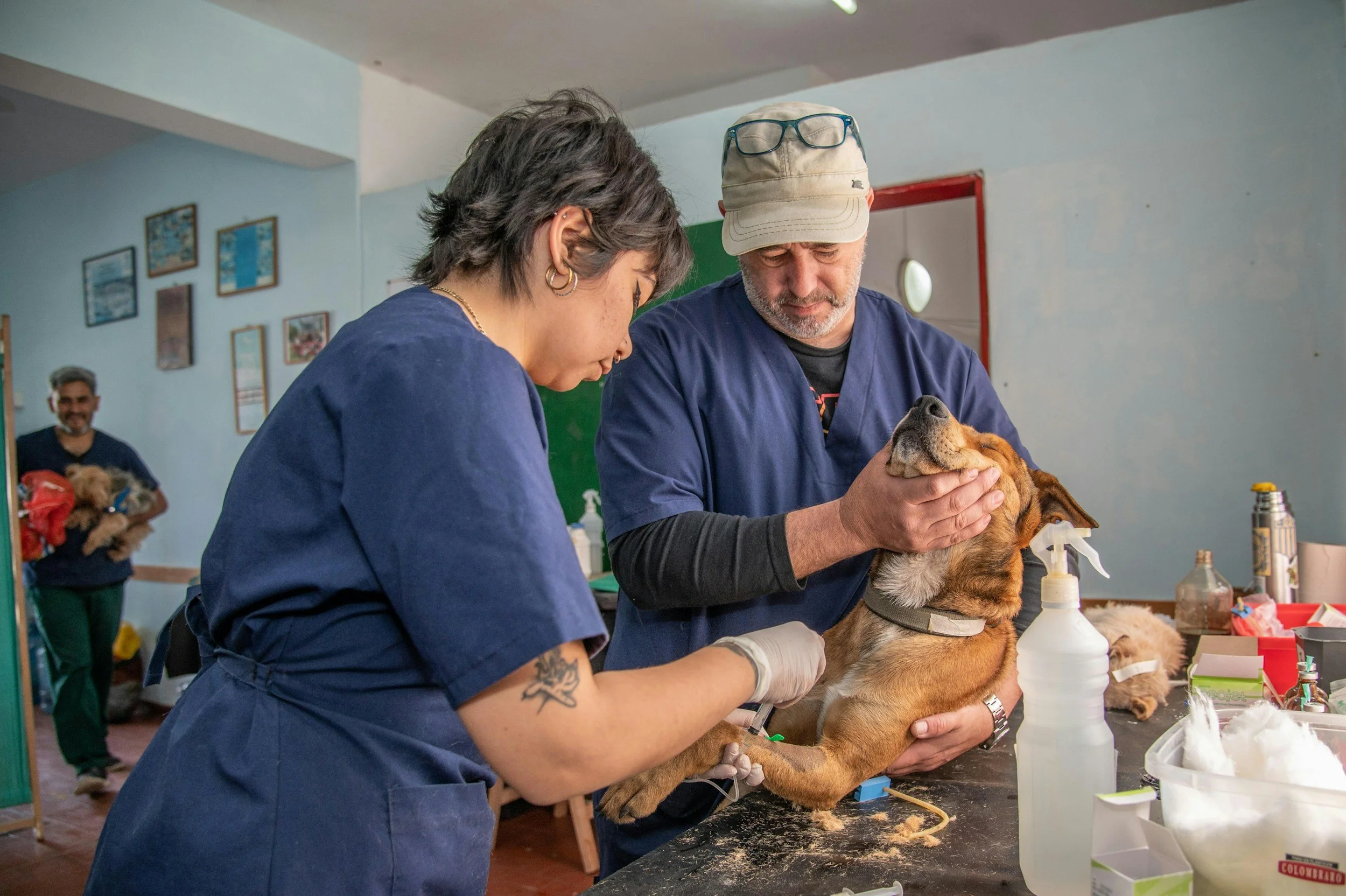
VETERINARIAN (VET)
Veterinarians (vets) are doctors that are licensed to treat diseased and injured animals.
“The best doctor in the world is a veterinarian. They can’t ask their patients what’s the matter—they just know.”
Admission requirements for Veterinary Medicine programs vary from one program to another. However, most programs share a group of prerequisite courses, and the Hendrix courses that fulfill these requirements are listed below.
In addition, many schools require time spent observing, shadowing, or interning with a veterinarian. A Hendrix internship is an excellent way to get 120 of these hours, and volunteering or working at a clinic can also help you build up this part of your resume.
Common Course Requirements for Vet Med Programs
BIOL 150 Fundamentals of Cellular Life (w/Lab)
BIOL 155 Evolution & the Diversity of Life (w/Lab)
BIOL 340 Microbiology (w/Lab)*
*Note: BIOL 250 Genetics is a prerequisite for BIOL 340
CHEM 110/120 General Chemistry I & II (w/Lab)
CHEM 240/250 Organic Chemistry I & II (w/Lab)
CHEM 330 Biochemistry (w/Lab)
PHYS 235/245 General Physics I & II (Workshop)*
*Note: MATH 130 Calculus I is a pre- or corequisite for PHYS 235
2 to 3 Humanities and Social Science Courses
2 Mathematics Courses (MATH)*
*Note: Some programs will accept Statistics
2 Writing Courses (ENGL/ENGC)*
*Note: Some programs will accept Speech Communication
More details about specific program requirements can be found at:
https://admin.applytovetschool.org/wp-content/uploads/2025/05/Prereq-chart-for-VMCAS-2026.pdf
Arkansas will have two Vet Med Programs
Arkansas State University* - click here for more info
*Note: They are anticipating their first class in the fall of 2026
Lyon College - click here for more info
Vet Med Programs with seats for AR students
Louisiana State University (LSU) - click here for more info
Oklahoma State University (OSU) - click here for more info
University of Missouri - click here for more info
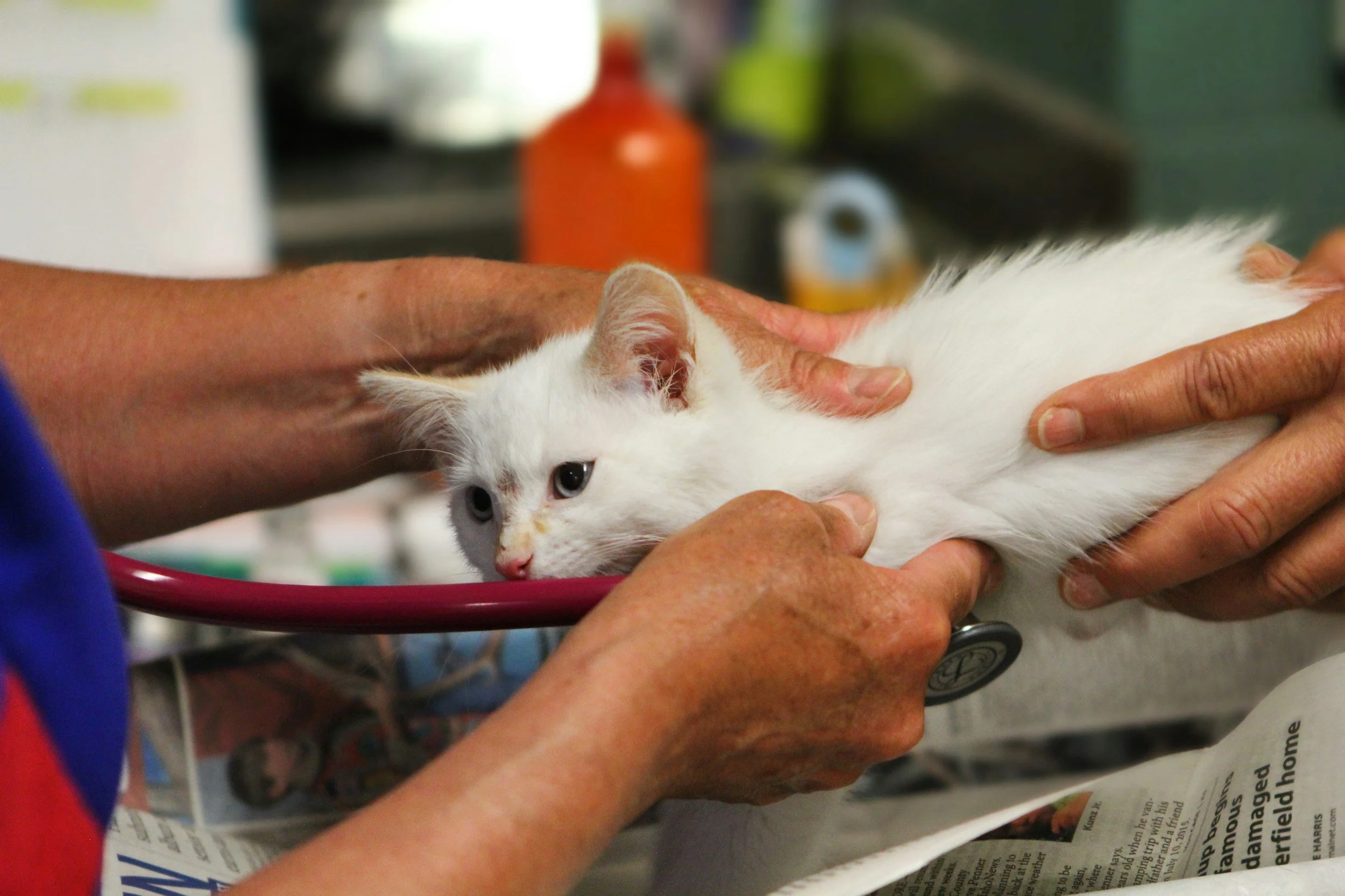
How to Prepare for Vet School
One possible course plan appears below.
Please note: This plan does not include all of the necessary courses to fulfill the First-Year Experience, Learning Domains, Capacities, Odyssey, or Major requirements. Students are strongly encouraged to work with their Academic Advisor to make sure all of the requirements for graduation are fulfilled, as well as the prerequisites for specific Vet Med programs.
Course Plan will be added soon.

More information about Vets
Benefits of becoming a Veterinarian include an ability to practice a variety of specialities including cardiology, dermatology, ophthamology, and surgery. In addition, vets can treat large and small animals, as well as domestic species and exotics.
A degree in veterinary medicine can also lead to surprising places. Vets can pursue careers in public health, research, or teaching.
And according to the US Bureau of Labor Statistics, the employment of vets is expected to grow by 10% between 2024 and 2034, which is a rate that is more than twice as fast as the average rate for all occupations.
A career as a Vet is appealing to many people, making entry into veterinary medicine programs competitive.
Look to the Future
Because admission requirements for veterinary medicine programs vary from one program to another, students should contact the program(s) of their choice early in their Hendrix career. Also remember that Veterinarian is not a major at Hendrix.
Get involved!
Community service, veterinary medicine experiences, and leadership activities are essential.
Observe Veterinarians
Many schools require time spent observing, shadowing or interning with a veterinarian, and most admitted students will exceed the minimum requirements. Hendrix internships require a minimum of 120 hours. You should try to do more than 120 hours and with different vets if you can.
Keep your academic record strong
Few individuals get admitted with the minimal requirements, which usually includes a minimum GPA of 3.5. More often programs are looking for the most highly qualified students and will therefore have higher expectations and standards, admitting students with qualifications and GPAs higher than the minimum requirements. When choosing your schools to apply to, check to make sure you will meet or exceed the requirements.
Develop relationships
Get to know some veterinarians, faculty and work/volunteer supervisors. All of these individuals can be a resource for you to obtain new and valuable opportunities. Always maintain a good rapport with these contacts as well. You never know when you will need a letter of recommendation, and you want to make sure they can provide you with a great letter, not a mediocre one.
Stay up to date on current veterinary medicine issues
The American Veterinary Medical Association (AVMA) and VIN News Service are great resources for staying up-to-date on current issues impacting veterinarians.
For More Information:
Contact Jenn Dearolf in the Biology Department.


